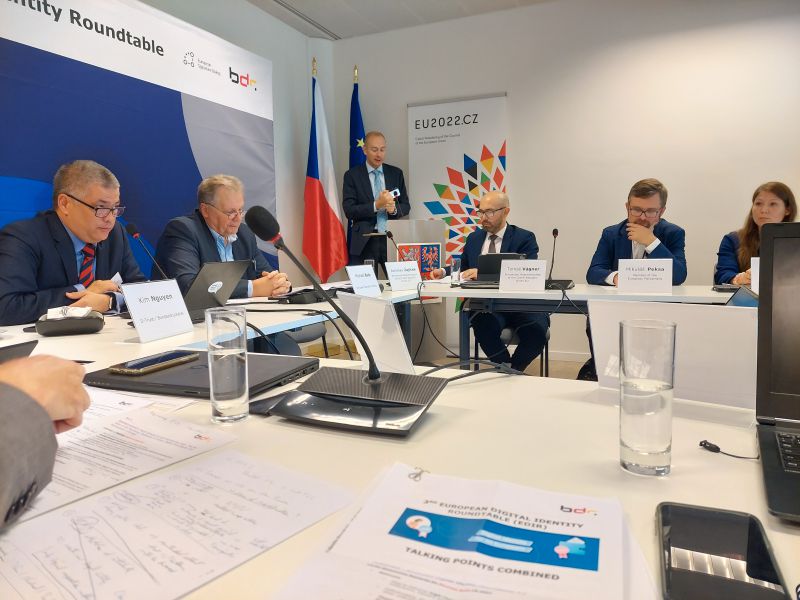
As trilogue negotiations continue, the 4th European Digital Identity Roundtable – under the auspices of the Spanish EU Council Presidency – discussed the challenges of implementing the eIDAS Regulation 2.0. Uniform standards, defined and controlled by EU institutions, are key for completing the European Trust Space. EUDI Wallets should be secure and – with many application options – attractive for users.
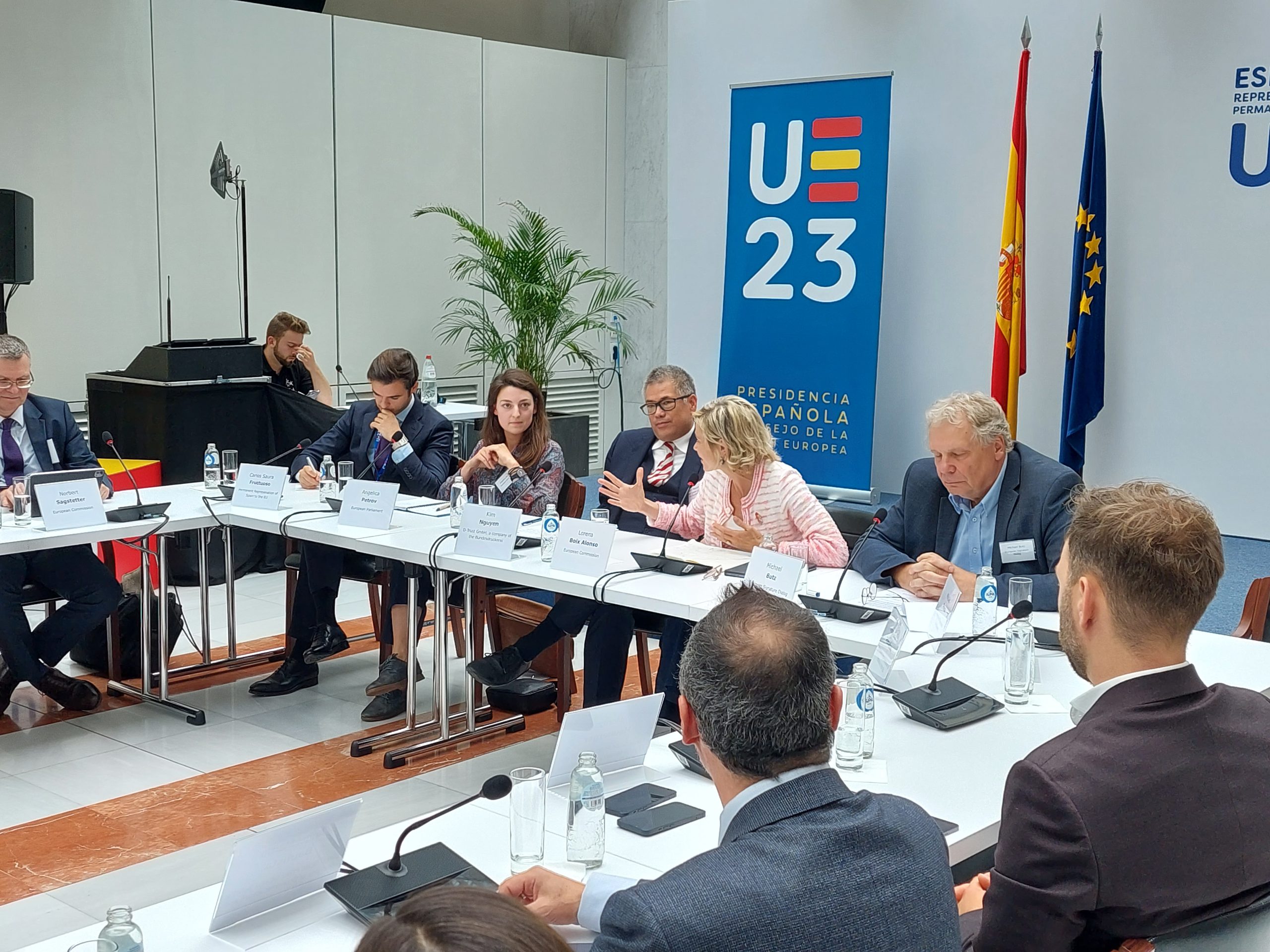
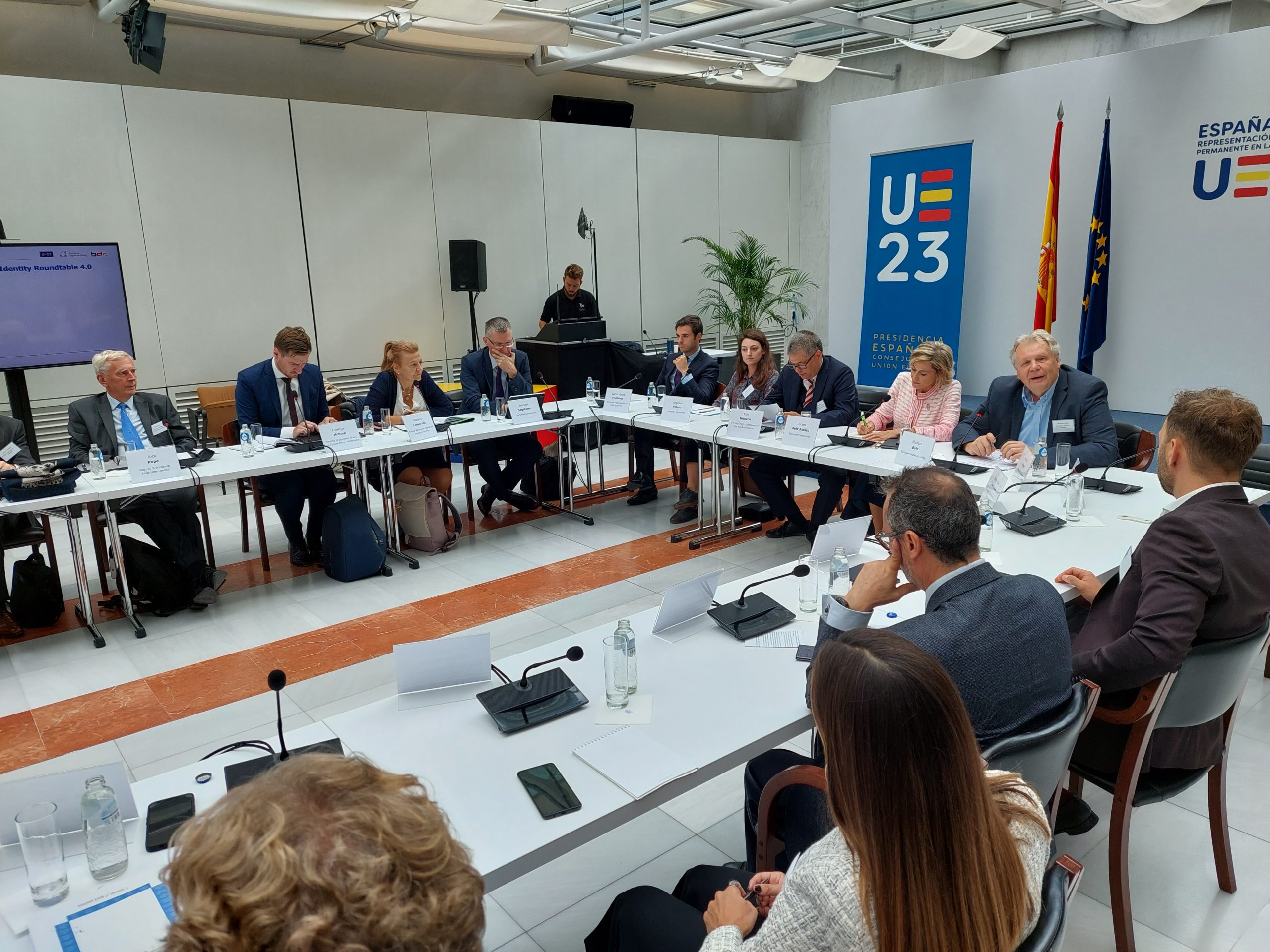
Brussels, 19. September 2023 – As organizers of the 4th European Digital Identity Roundtable (EDIR), the European Signature Dialog (ESD) and the Bundesdruckerei Group brought together representatives of the Commission, the European Parliament and the Member States with representatives of Large Scale Pilots, standardization organizations, public institutions as well as trust service provider and users to discuss the revision of the eIDAS Regulation and implementation of the European Digital Identity Wallets. This year's event was held under the auspices of the Spanish Presidency of the Council of the EU.
Lorena Boix Alonso, Director for Digital Society, Trust and Cybersecurity in the Directorate General for Communication Networks and Technologies at the European Commission, emphasized that she was very happy about the progress in the negotiations on the European Digital Identity Framework: “I am confident that the agreement found by the co-legislators will fully deliver on all objectives of the European Digital Identity Framework – offering all EU citizens safe and secure digital identification in full user control and protection of personal data. The European Digital Identity wallet will be a step change for all Europeans, improving safety and convenience in digital identification. The wallet will also bring opportunities to the Single Market triggering innovation and business growth as well as a more rapid digitisation of public administration. It will also promote safer and easier exchange with Third Countries that adopt the model and standards we define”.
Carlos Saura Fructuoso from the responsible Council working group emphasized the great opportunities. To him, the challenges still to be met in implementation appear to be solvable and the nation states "would now have it in their hands to adapt digital identities as one of the foundations for functioning digital societies and for digital value creation to national requirements and circumstances in such a way that both the concerns of the state and administration and the needs and interests of citizens and companies are met”
As trilogue negotiations continue, the EDIR respected the confidentiality of this difficult process and did not discuss any details from the negotiations. Instead, the debate focused on the question of what conditions are necessary to ensure the successful introduction of the EUid Wallets.
One aspect discussed among many others was the obligation of web-browsers to display the so-called qualified certificates for website authentication (QWACs) and its implications for Europe’s digital sovereignty. Michael Butz, chairman of the ESD, stated that "QWACs create transparency by providing the user with the secured information about the identity of the website provider. The visualization of QWACs is important for consumers to safely navigate in the digital world." Dr. Kim Nguyen, Managing Director of D-Trust GmbH, a company of the Bundesdruckerei Group, emphasized: "Despite the strong headwind from international browser companies, the EU should make use of its right to set standards here and strengthen EU sovereignty in the interest of consumer protection and EU industry. We hope that this will also be reflected in the final text of the eIDAS revision."
The second part of the event focused on the implementation of the European Digital Identity Wallet. Representatives of the various institutions involved in the development of European Digital Identity Wallets presented the status quo of their work and quite openly named the challenges. It was unanimously recognized that implementing acts, the architectural reference framework as well as standards and certifications are key in this respect. "A trusted digital identity exchange can and will only exist if future eIDAS implementing acts and technical standardization create a very clear framework in which attractive and accessible use cases can evolve," explained Michael Butz.
In his closing remarks, Marcos Alonso Alonso, Ambassador of the Permanent Representation of Spain to the European Union and patron of the event, once again made clear how important it is, also from a national as well as a European perspective, "that the various stakeholders work together closely and openly here to build such an ecosystem" which is why he – like the Council presidencies in previous years – expressly thanked the European Signature Dialog and Bundesdruckerei for organizing this round table.
About ESD:
The European Signature Dialog (ESD) represents the leading European trust service providers (TSPs). TSPs enable secure digital interactions across Europe – between public entities, businesses, and individuals. All ESD members are working ceaselessly to enable trust, transparency, security, and protection of consumers on the internet every day according to top EU standards.
Read More
Vienna, September 25th 2023